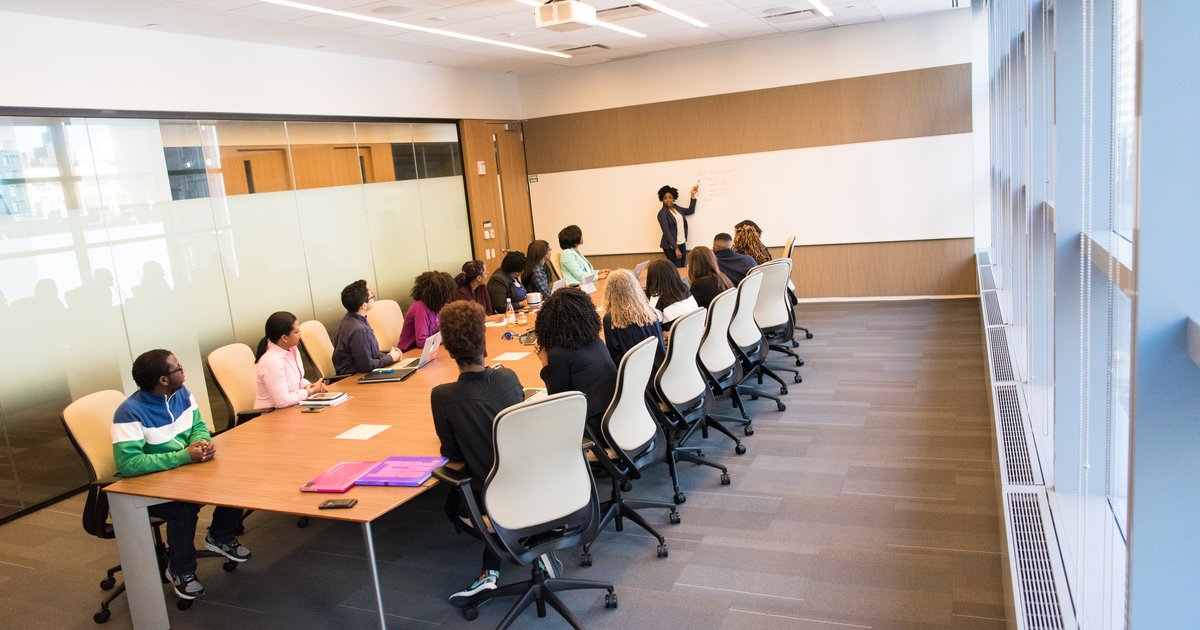

A significant share of what effective leadership used to accomplish without much conscious effort happened through simple physical proximity. A leader walking through an office noticed who seemed stressed, overheard a conversation that revealed a brewing problem, and was seen by the team often enough that her presence and availability were never really in question. None of this required deliberate design. It was a byproduct of shared physical space. The shift toward remote and hybrid work has not eliminated the need for any of these functions, but it has eliminated the automatic mechanism that used to provide them, which means leaders now have to build deliberately what proximity used to supply for free.
Trust Is Built Through Small Observations
This distinction matters because a great deal of guidance on remote leadership focuses on tools and logistics, video conferencing etiquette, project management software, communication cadence, while underplaying the deeper challenge, which is essentially about trust and visibility rather than technology. Trust between a leader and a team is built, in significant part, through a large number of small, low-stakes observations accumulated over time: how someone handles a minor setback, what they do when no one is explicitly watching, the tone they take in an offhand comment. In a physically co-located environment, these observations happen constantly and incidentally. In a remote environment, they mostly do not happen at all unless a leader creates specific occasions for them to occur.
One of the more consequential mistakes remote leaders make is substituting monitoring for trust-building, increasing the frequency of status checks, requiring more detailed activity reporting, or leaning heavily on tools that track visible activity, in an attempt to recreate the sense of oversight that used to come from simply seeing people at their desks. This tends to produce the opposite of its intended effect. It signals distrust, which tends to reduce the discretionary effort and honest disclosure that genuine trust actually produces, and it substitutes a shallow proxy, visible activity, for what leaders actually need to know, which is whether the work is progressing well and whether problems are being surfaced honestly. Research on remote team performance consistently finds that psychological safety and communication quality predict outcomes far better than monitoring intensity, and that teams subjected to heavier monitoring frequently report lower trust in their leadership, not higher performance.
Replacing the Hallway Conversation
What tends to work better is a deliberate replacement of the incidental contact that proximity used to provide, rather than an attempt to compensate for its absence through oversight. This means building specific, protected time for conversation that has no formal agenda, the remote equivalent of a hallway conversation, rather than filling every scheduled interaction with status updates and task review. It means leaders making a point of checking in on how someone is doing as a distinct question from what someone is working on, since the two questions rarely get asked together once the incidental prompts for the former have disappeared. It means over-communicating context and reasoning in written form, since remote environments strip away the tone, body language, and immediate follow-up questions that used to allow misunderstandings to be caught and corrected quickly in person.
Visibility runs in both directions, and leaders often focus disproportionately on their visibility into the team's work while underinvesting in their own visibility to the team. A remote leader who becomes primarily a name attached to messages and meeting invitations, rather than a felt presence, loses something that matters for morale and cohesion even if every task is technically being coordinated effectively. Leaders who lead distributed teams well tend to be deliberate about narrating their own availability and their own thinking, sharing more of their reasoning and their own current challenges than they might have needed to in a co-located environment where some of that context was absorbed ambiently.
The Two-Tier Risk in Hybrid Teams
Hybrid arrangements, where some portion of a team is in person and some is remote, introduce a further complication worth naming directly, because they carry a real risk of creating a two-tiered organization, in which in-person employees accumulate the incidental trust and visibility advantages of proximity while remote employees do not, regardless of a leader's stated intentions toward equity. Leaders managing hybrid teams need to actively guard against decisions, promotions, and opportunities flowing disproportionately toward whoever happens to be physically present most often, which requires conscious tracking of these patterns rather than an assumption that good intentions alone will prevent them.
The underlying principle across all of this is that remote and hybrid leadership is not primarily a logistical adaptation but a shift from incidental to intentional relationship-building. What proximity used to provide automatically now has to be designed, scheduled, and sustained through deliberate leadership choices. Leaders who treat this as a genuine redesign of how trust and visibility are built, rather than a technology problem to be solved with better software, tend to lead distributed teams that function with the same depth of connection that used to require sharing a physical room, even though very little about how that connection is built looks the same as it did before.