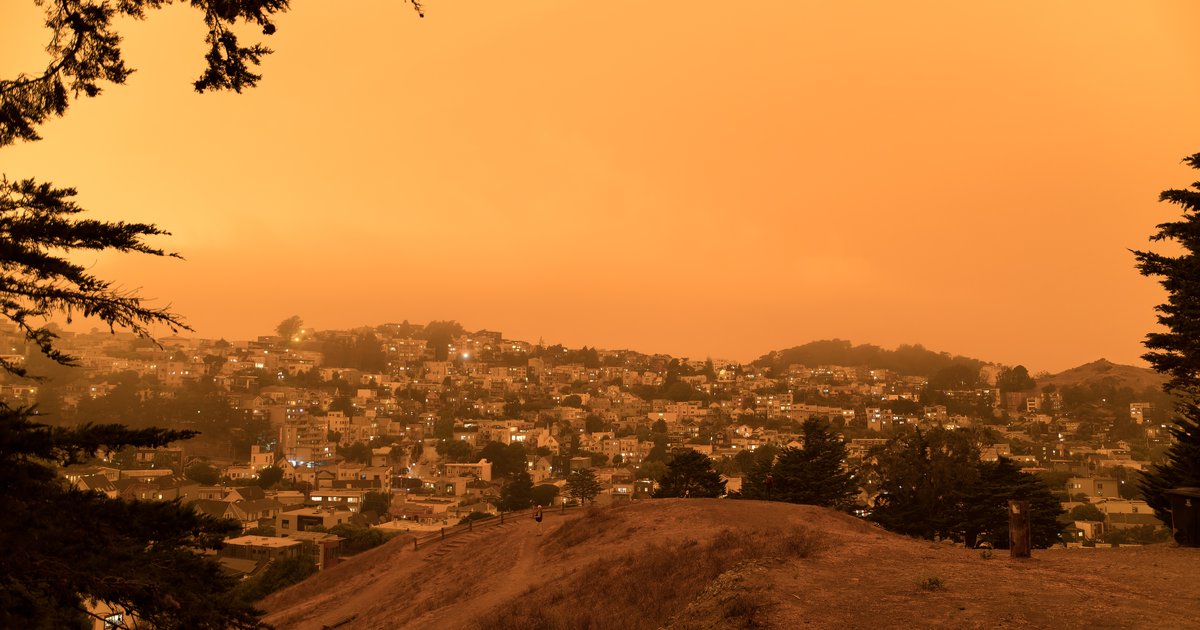
Summer used to mean wildfire concerns were largely confined to communities near forested land in the West. That geographic boundary has eroded steadily over the past decade, as smoke from large fires has repeatedly traveled hundreds or even thousands of miles, blanketing cities and suburbs far from any active flame in a haze that public health officials now treat as a recurring seasonal hazard rather than an isolated event. This year, a growing number of school districts, including many in regions that historically had no reason to plan around wildfire smoke, have adopted formal air quality protocols governing when outdoor activities must be curtailed or schools closed entirely.
Why Children Face Greater Risk
The health rationale behind these protocols rests on a substantial body of research linking wildfire smoke exposure to a range of respiratory and cardiovascular effects, with children considered particularly vulnerable because their lungs are still developing and because they breathe more air relative to their body size than adults, increasing their relative exposure during any given period outdoors. Wildfire smoke contains fine particulate matter small enough to penetrate deep into the lungs and, research increasingly suggests, potentially enter the bloodstream, distinguishing it from more visible but less physiologically dangerous forms of air pollution. Children with asthma or other preexisting respiratory conditions face especially acute risk, with smoke exposure days consistently associated with spikes in emergency department visits for respiratory complaints in affected regions.
How Districts Are Setting Thresholds
Districts developing formal protocols this year have generally modeled them on air quality index thresholds, establishing specific numeric triggers at which recess and outdoor physical education must move indoors, at which outdoor athletic practices must be modified or canceled, and at which, in the most severe cases, schools should close entirely or shift to remote instruction. The specificity of these thresholds represents a meaningful shift from the more ad hoc, judgment-call approach many districts relied on in past smoke events, where decisions were often made reactively and inconsistently, sometimes leaving students engaged in outdoor activity on days with genuinely hazardous air quality simply because no clear policy existed to prevent it.
Infrastructure Gaps in Aging Buildings
Implementing these protocols has surfaced a set of practical challenges that districts are still working through. Many school buildings, particularly older facilities, were not designed with air filtration capable of meaningfully reducing indoor particulate levels during a smoke event, meaning that moving activities indoors provides only partial protection unless paired with upgraded ventilation and filtration systems, investments that compete for limited facilities budgets against many other infrastructure priorities. Districts in regions newly grappling with recurring smoke exposure often lack this infrastructure entirely, having never previously needed to consider air filtration as a wildfire-specific concern, and are now assessing retrofit costs that in some cases run into the millions of dollars for a full district.
Weighing Closures Against Disruption
The decision to cancel outdoor athletics or close school entirely also carries its own tradeoffs that district leaders must weigh. Remote instruction days, even when smoke conditions justify them on public health grounds, reintroduce many of the same learning disruption concerns that became prominent during pandemic-era school closures, along with childcare burdens for working families who may have limited notice before a closure is announced. Athletic programs, particularly those with practices or competitions scheduled well in advance, face logistical complications when smoke forecasts require last-minute cancellations, and coaches and athletic directors have had to build more flexibility and contingency planning into scheduling than was previously standard practice.
Public health researchers who study climate-related health risks describe the expansion of wildfire smoke protocols into new regions as an example of a broader pattern: institutions built around historical climate patterns increasingly needing to adapt their standard operating procedures as those patterns shift. Some researchers have drawn comparisons to the way schools gradually developed formal protocols for extreme cold and severe weather closures over past decades, suggesting that wildfire smoke response may follow a similar trajectory toward standardization as the underlying risk becomes a recognized recurring feature of the seasonal calendar rather than an anomaly.
As fire season activity is monitored across the country this summer, districts that adopted new protocols for the first time this year will effectively be testing them under real conditions, and education officials expect that experience to inform revisions heading into next year, particularly around the thorny questions of building infrastructure investment and how to balance public health caution against the disruption that closures and activity cancellations impose on students and families.