As academic expectations have crept earlier into childhood, with kindergartens increasingly resembling what first grade classrooms looked like a generation ago, a substantial body of developmental research has been pushing in the opposite direction, documenting the specific and durable cognitive benefits of play. This is not a fringe position among child development researchers. It is closer to a consensus, grounded in decades of longitudinal and experimental work examining how young children actually acquire language, numeracy, self-regulation, and social skills.
Free Play, Guided Play, and Direct Instruction
The research distinguishes between several forms of play, and this distinction matters enormously for how the findings should be interpreted. Free play involves minimal adult direction and is driven entirely by the child's own interests. Guided play sits in between, where an adult sets up an environment or provides light scaffolding toward a learning goal while the child retains control over the activity itself. Direct instruction, by contrast, involves adult-led, explicit teaching of a specific skill or concept. Studies comparing these approaches head to head have generally found that guided play produces the strongest academic outcomes of the three, often matching or exceeding direct instruction on measures of early math and literacy while simultaneously producing larger gains in flexible thinking, motivation, and social skills that direct instruction alone does not typically target.
The mechanism researchers point to is that play, particularly pretend and sociodramatic play involving negotiated rules and shared imaginative scenarios, requires children to exercise exactly the executive function skills, working memory, inhibitory control, and cognitive flexibility, that underlie later academic success. A child negotiating the rules of an imaginary restaurant with peers is practicing turn-taking, holding multiple roles in mind, and adjusting behavior in response to changing social demands, all of which are cognitively demanding tasks disguised as fun. Longitudinal studies tracking children's play behavior in preschool alongside later academic outcomes have found that the complexity of a child's pretend play, particularly sociodramatic play with peers, predicts later self-regulation and academic performance independent of family background and initial cognitive ability.
How Play Builds Math and Literacy Skills
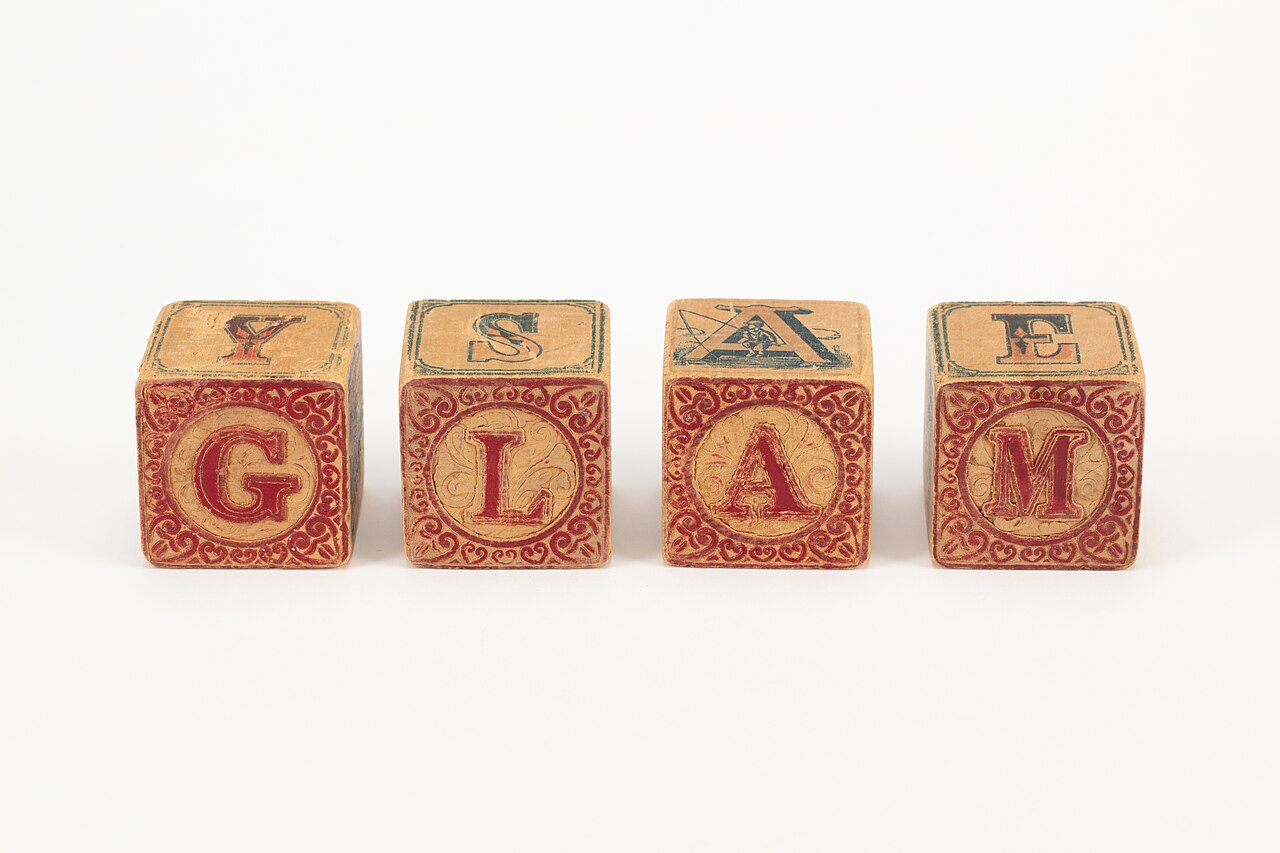
Mathematics offers a particularly well-studied example of how play can build formal academic skills. Research on block play, puzzle completion, and pattern-based games has found consistent associations with later spatial reasoning, a skill strongly linked to mathematics achievement, including in geometry and algebra years later. Experimental studies that randomly assigned children to structured block-play interventions found measurable gains in spatial vocabulary and reasoning compared to control groups, with some studies finding that these gains persisted into later grades, suggesting the benefit is not merely a short-term testing artifact.
Language and literacy development show a similar pattern. Studies of dramatic and pretend play have found that the complex, decontextualized language children use during pretend scenarios, negotiating plot, assigning roles, explaining absent objects, closely resembles the kind of narrative and abstract language skills that predict later reading comprehension. Shared storybook reading combined with related pretend play has shown stronger vocabulary gains in controlled studies than storybook reading alone, suggesting that the active, generative quality of play adds something that passive reception does not.
Why Blended, Playful Learning Works Best
None of this research argues that play should entirely replace explicit instruction, and researchers in this area are generally careful to avoid that framing. Certain foundational skills, including phonemic awareness and basic numeral recognition, do appear to benefit from some degree of direct, explicit teaching, particularly for children who show early signs of difficulty and may not reliably encounter these concepts through play alone. The strongest research support is for a blended model, sometimes called playful learning, that integrates explicit skill-building into a play-rich environment rather than treating play and instruction as mutually exclusive approaches competing for classroom time.
The policy tension this research creates is significant, particularly given the pressure many early childhood programs face to demonstrate measurable academic readiness ahead of kindergarten entry. Programs that have shifted toward more didactic, worksheet-based instruction in response to this pressure sometimes show short-term gains on narrow assessments of letter and number recognition, but longitudinal research following children over several years has repeatedly found that these early advantages tend to fade by second or third grade, while measures of self-regulation, motivation, and socioemotional adjustment, the skills more strongly associated with play-rich environments, often show more durable long-term relationships with achievement. Some studies have found that children in highly didactic early programs show elevated stress behaviors and reduced intrinsic motivation for learning compared to peers in play-based programs, an outcome that matters independent of any test score.
For early childhood educators and policymakers, the research offers a reasonably clear, if politically inconvenient, message: pushing formal academic instruction earlier does not reliably produce better long-term outcomes, and may come at a measurable cost to the very skills that predict success later on. Guided play, thoughtfully designed around specific learning goals, appears to be not a departure from rigorous early education but one of its most evidence-supported forms.