The Federal Emergency Management Agency was built around a model of episodic response: a hurricane strikes, a flood recedes, a wildfire is contained, and federal resources flow in to help a defined community rebuild before the system resets for the next event. Research on disaster policy increasingly argues that this model, designed for an era of relatively infrequent major disasters, is straining under a pattern of overlapping, sustained disaster activity that climate researchers link to a warming climate, and that the strain is exposing structural weaknesses in how federal recovery policy actually works.
The Gap Between Immediate and Long-Term Aid
One of the more consistent findings across disaster recovery research involves the pace and structure of federal aid disbursement. Individual assistance grants administered directly by FEMA tend to reach affected households relatively quickly but are capped at amounts that researchers studying actual rebuilding costs generally find insufficient to fully restore a severely damaged home, meaning the largest pool of federal recovery funding, distributed through the Department of Housing and Urban Development's disaster recovery block grant program, often does not reach communities for months or, in many documented cases, years after a disaster. Research tracking this gap has found that the delay disproportionately harms lower-income households, who typically lack the savings or credit access to bridge the period between disaster and eventual aid disbursement, forcing difficult choices about whether to rebuild, relocate, or live in substandard conditions while waiting.
Documentation Barriers and Heirs' Property
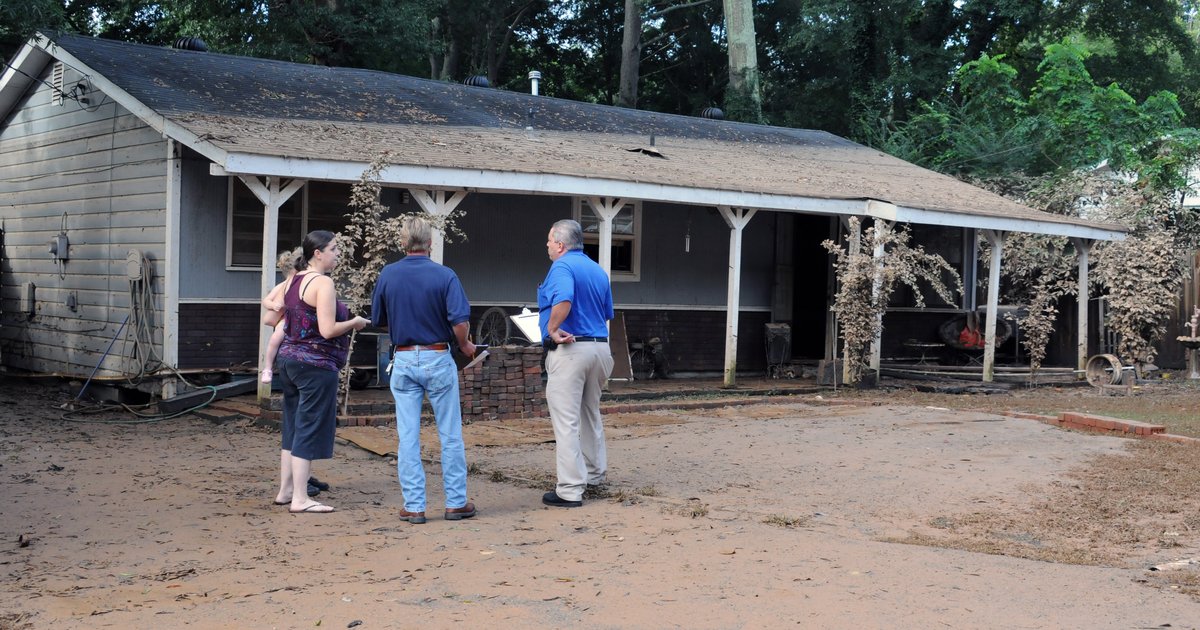
The disaster recovery process also reveals what researchers describe as a documentation and paperwork burden that systematically disadvantages the households with the fewest resources to navigate it. FEMA and related recovery programs typically require applicants to demonstrate clear property ownership, often through formal deeds and title documentation, a requirement that research has found excludes a meaningful share of households, particularly in historically underserved communities where property has been passed down informally across generations without formal legal transfer, a pattern sometimes called heirs' property that is especially common in some rural and historically Black communities in the Southeast. Households unable to demonstrate clear title have been found in multiple studies to receive substantially less federal recovery assistance than comparably damaged properties with clear documentation, effectively excluding some of the most vulnerable disaster survivors from the aid system meant to help them.
Racial and Income Disparities in Recovery
Research comparing disaster recovery outcomes by income and race has produced some of the more striking findings in this policy area. Multiple studies tracking wealth outcomes after major disasters have found that white and higher-income households tend to see wealth increases following a disaster and subsequent recovery period, plausibly linked to insurance payouts and property value increases in areas that rebuild with federal investment, while Black and lower-income households in the same disaster-affected areas more frequently experience wealth declines, a divergence researchers attribute to disparities in insurance coverage, homeownership rates, access to recovery financing, and the documentation barriers described above. This research has fueled a growing policy argument that disaster recovery programs, without deliberate equity-focused design, tend to reproduce and even widen existing wealth disparities rather than restoring affected communities to their prior condition evenly.
The Promise and Limits of Buyout Programs
Buyout and managed retreat programs, which offer to purchase flood-prone or repeatedly damaged properties and require the land be returned to open space rather than rebuilt, represent one of the more actively researched areas of long-term disaster policy, particularly as climate projections make some areas increasingly unsuitable for continued habitation regardless of how much recovery funding is available after each event. Research evaluating existing buyout programs finds they can meaningfully reduce future disaster losses and, in several studies, improve long-term outcomes for participating households compared to repeated cycles of damage and rebuilding. But the programs also face persistent challenges: buyouts are typically voluntary and property-by-property, which can fragment neighborhoods as some households leave while others remain, undermining community cohesion, and the process from application to actual buyout completion frequently takes multiple years, during which participating households remain exposed to the very risk the program is meant to address.
Why Mitigation Spending Lags Behind
Pre-disaster mitigation investment, funding directed toward reducing future disaster risk before an event occurs rather than responding after the fact, has drawn increasing research attention given consistent findings that mitigation spending offers a substantially higher return on investment than post-disaster recovery spending, since dollars spent hardening infrastructure, elevating structures, or restoring natural flood buffers before a disaster prevent damage that would otherwise require far more expensive recovery funding later. Despite this evidence, federal disaster spending remains heavily weighted toward post-disaster response and recovery rather than pre-disaster mitigation, a pattern researchers attribute partly to the greater political visibility of responding to an active disaster compared to funding prevention for a disaster that has not yet occurred, and partly to statutory funding structures that make emergency post-disaster funding easier to appropriate than sustained mitigation investment.
Taken together, the research on disaster recovery policy suggests a system that performs reasonably well at the most visible, immediate phase of disaster response, search and rescue, emergency shelter, and initial aid, but performs considerably less well at the slower, less visible work of equitable long-term recovery and forward-looking risk reduction. As disaster frequency and severity trends continue, researchers studying the field increasingly argue that closing this gap, shifting a meaningful share of resources and policy attention toward pre-disaster mitigation and equity-focused recovery design, will matter as much for long-term outcomes as the emergency response capacity that has traditionally received the most public and political attention.